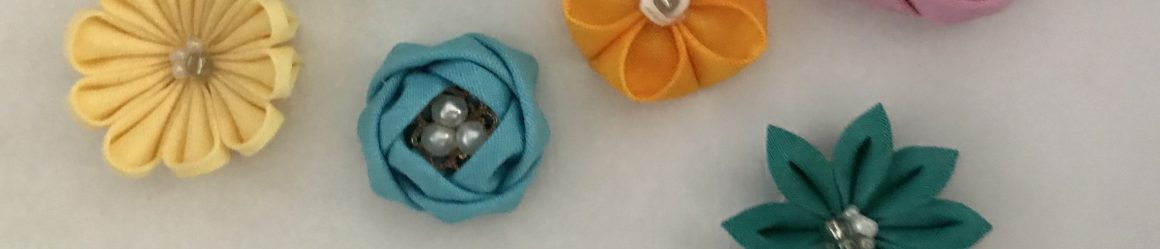
The History of Tsumami Zaiku

“Kanzashi” (hair accessories) are as old as Japan, but it is said that women at the ancient palace in Kyoto started making them using leftover kimono cloth. It was later, during the Edo era, when tsumami zaiku spread to east Japan and became a professional craft. 

Edo, another name for ancient Tokyo, became a major production area. “Daimyo” (local warlords) were required to visit the shogun in Edo once every 2 years, and tsumami zaiku accessories became very popular home-coming gifts for their families.

In the early 20th century, tsumami zaiku actually became an optional part of a girl’s education. It was taught in schools as a kind of elective. Nowadays, though, Japanese women have adopted a more western style of fashion for everyday life. Tsumami zaiku accessories are mainly worn at traditional festivals and celebrations along with kimono or yukata. Because Japan has so many holidays, girls who love to dress in traditional Japanese clothing will usually also have a collection of beautiful kanzashi.

about me

Thank you for stopping by umecrafts.com!

The name Umecrafts comes from my family name, Umeda, which means plum tree field in Japanese. People across the world are familiar with the beautiful “sakura” (or cherry blossom trees) of Japan, but Japanese also enjoy viewing the lovely “ume” trees that bloom just weeks earlier.   

Growing up in Japan, I expressed myself through many traditional Japanese crafts. And after I moved to the United States with my family, I wanted to share my love of them through this blog. 

While I love many Japanese crafts, tsumami zaiku is my passion. “Tsumami” means to tuck or pinch, and “zaiku” means craft. Tsumami zaiku is the art of making beautiful flowerlike hair accessories like Geisha wear. 

We make them from many pieces of square cloth tucked together. The difference of tuck, material, color, and size of the cloth gives the pieces their richness. Creating Japanese hair accessories is actually simple to learn, but the process takes a lot of time, and the art can take a lifetime to master.

I hope everyone will join me in discovering tsumami zaiku and many other rich Japanese crafts!